
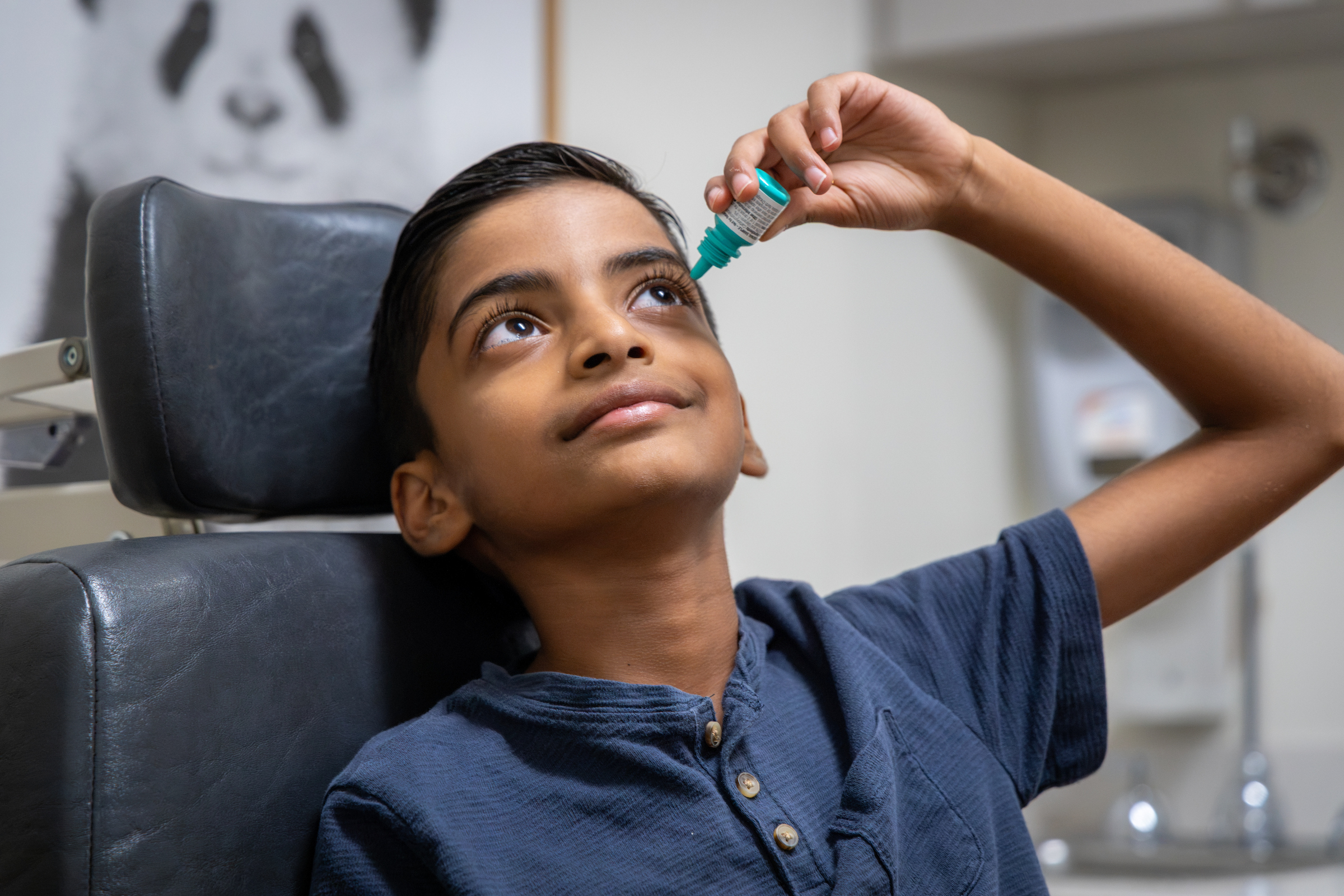
Can Childhood Nearsightedness Be Delayed? MBKU Joins National Clinical Trial
Marshall B. Ketchum University (MBKU), a Fullerton-based health care university, is participating in a national clinical trial investigating whether low-dose atropine eye drops can delay the onset of childhood nearsightedness (myopia).
Known as the DONUT Study—short for “Delaying the Onset of Nearsightedness Until Treatment”—the $25 million clinical trial is funded by the National Eye Institute and involves more than a dozen clinical centers nationwide. The study will investigate whether low-dose atropine eye drops can delay the development of myopia in children at higher risk of developing the condition.
Researchers at MBKU and its clinical care network, Ketchum Health, are currently recruiting children between the ages of 6 and 11 who are at increased risk of developing myopia.
“Myopia is one of the fastest-growing vision concerns we’re seeing in children today,” said Dr. Susan Cotter, Associate Dean for University Research at MBKU, “What makes this study different is that we’re not waiting for children to become nearsighted. We’re asking a much earlier question—can we actually delay it from happening in the first place?”
A growing health concern
Myopia causes distant objects to appear blurry and is becoming increasingly common worldwide. Although the exact causes of myopia are not fully understood, both genetic and environmental factors contribute to its development. Research suggests that spending more time outdoors may reduce the risk of developing myopia, while prolonged near work may be associated with increased risk.
Myopia typically develops during childhood and often progresses as children grow. Higher levels of myopia are associated with an increased lifetime risk of serious eye conditions, including retinal detachment and glaucoma. Delaying the onset of myopia could potentially reduce the amount of myopia a child develops over time and lower the risk of future vision complications.
A shift from treatment to prevention
For decades, myopia was seen as a problem to be treated when it arose. Current treatments, including specialized spectacle and contact lenses and atropine eye drops, have been shown to slow myopia progression in children. The DONUT study takes a different approach by investigating whether treatment can begin before a child becomes nearsighted. If effective, this approach could potentially reduce the severity of myopia later in life.
What participation involves
Children enrolled in the study will be randomly assigned to receive either 0.05% atropine or placebo eye drops for two years. Participants will receive regular eye examinations and monitoring throughout the study. Children who develop myopia during the study will be offered myopia treatment.
“This is a rare opportunity for families to participate in a national research study right here in their own community,” said Dr. Angela Chen, Principal Investigator at MBKU. “Through Ketchum Health, we’re able to connect patients with innovative preventive care while also contributing to research that could influence how pediatric eye care is delivered in the future.”
Looking into the future of myopia
The DONUT Study could provide valuable evidence to guide future strategies for prevention and/or treatment of childhood myopia, a growing problem.
For MBKU and Ketchum Health, the study also aligns with the institution’s broader mission of integrating education, patient care, and research, and MBKU’s lead clinicians are grateful for the opportunity to join with other prominent health care institutions for this important investigation.
“We see this as part of our responsibility as an academic health center,” Cotter said. “It’s not just about treating patients today, but contributing to knowledge that can improve care for future generations.”
Families interested in learning more about the study or their child's eligibility can contact the Ketchum Health research team at research@ketchum.edu.