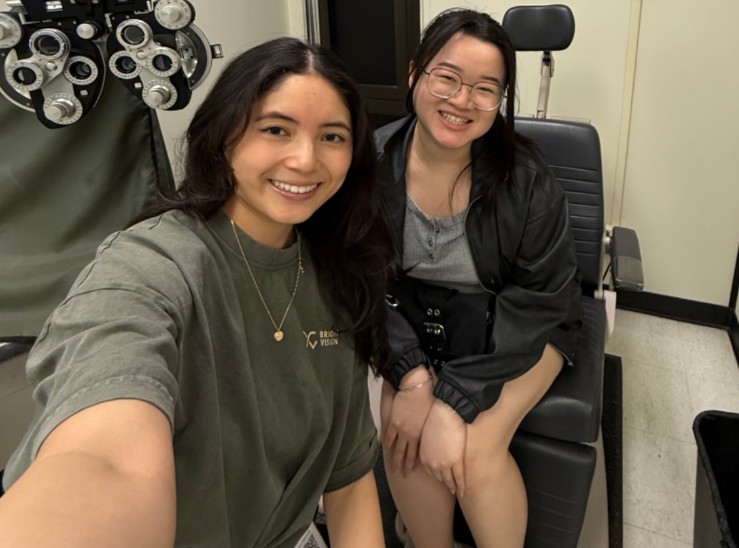
Part of the journey toward becoming an exceptional healthcare professional is participating in clinical skills labs that challenge you to refine not only your clinical techniques, but also
the way you think and communicate.
Along the way, you’ll complete proficiencies—assessments designed to evaluate the skills you’ve spent weeks practicing. I remember feeling incredibly nervous before my first proficiency! Although the quarter can feel overwhelming with coursework, exams, and labs, it’s important to take a step back and remember the bigger picture. Clinical skills labs are about much more than passing a proficiency. Looking back after completing my first year, here are three lessons I learned that I wish I had known from the start.
1. It’s okay to be slow at first.
When you’re learning a new clinical skill, you’re not just memorizing steps—you’re learning how to interpret findings, make decisions, and determine what to do next. That takes time. You’re not expected to perform everything perfectly on your first try.
Instead of focusing on speed, focus on understanding. Slow down, pay attention to what you’re seeing, and think about why you’re performing each step. As your confidence and understanding grow, your speed will naturally follow.
2. Being the patient teaches you just as much as being the doctor.
One of the most valuable parts of clinical skills labs is that you’ll spend just as much time in the patient’s chair as you do in the clinician’s. Pay attention to how your classmates explain procedures, communicate instructions, and help you feel comfortable. You’ll quickly notice which explanations are clear, which are confusing, and what makes you feel reassured as a patient.
Use these experiences to give thoughtful feedback to your peers, and be open to receiving feedback yourself. Developing empathy and effective communication now will make a lasting difference when you begin caring for real patients.
3. You’re building professional habits, not just clinical skills.
Clinical skills labs aren’t only about mastering procedures. They’re also where you begin developing the habits and soft skills that define excellent healthcare providers. The way you
clean and organize your equipment, educate your patient, communicate with your classmates, and maintain professionalism may seem like small details now, but they’ll become second nature as you continue through your training.
Just as importantly, you’ll build relationships with your classmates. These peers will become your support system throughout optometry school and, one day, your colleagues.
Finally, remember that your faculty members are on your team. While they’ll be evaluating you during proficiencies, they genuinely want you to succeed! Ask questions, have them watch your technique during practice, and welcome their feedback. The best time to make mistakes is while you’re still learning because every mistake is an opportunity to grow into a more confident and compassionate clinician.