
My first year at SCCO flew by far quicker than I could have ever imagined. However, every day was riddled with challenges and learning how to navigate each one made the day feel like it was dragging forward slowly. The first quarter at SCCO introduced us to the foundations of our optometric knowledge: Applied Biomedical Sciences, Optics, and Clinical Methods. While I remember feeling stressed in the beginning, the workload was manageable. Fall quarter was a good transition between the course load of undergrad to graduate school. It was not until Winter Quarter that I began to feel mounting stress pile up as the course load increased and expectations began to grow.
During the second quarter, I recognized that I was having more frequent headaches and my sleep schedule had become inconsistent. I was feeling more physically drained and was having trouble finding interest in the material I was studying. These are indications of burnout, defined by the World Health Organization as an “occupational phenomenon” which occurs because of unmanaged chronic stress. Fatigue, physical symptoms (such as headaches), mental exhaustion, lack of interest in the study material are all signs of burnout. In a fast-paced environment that is preparing us to be the next leaders of optometry, it is no surprise that burnout would be experienced. I anticipated that a time would come where I would grow apathetic and exhausted
by the barrage of information and exams. The realization that I had stumbled into that corner made me feel like I was trapped.
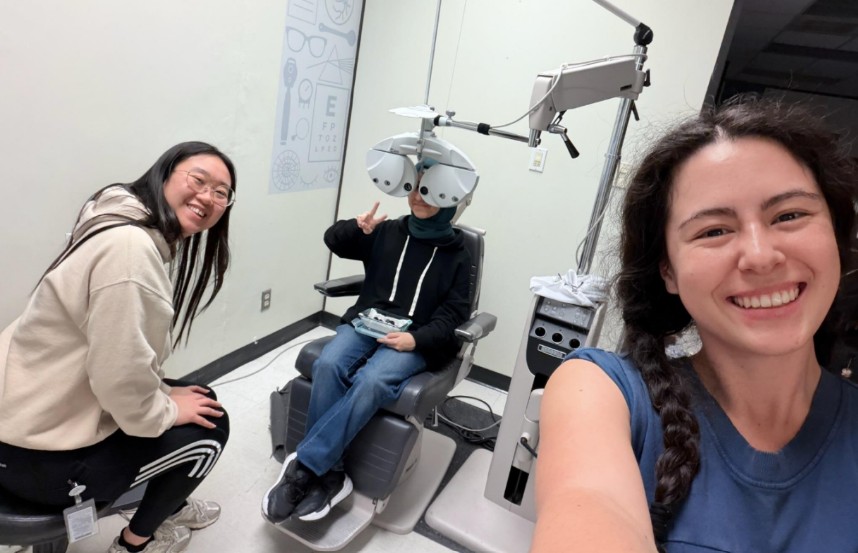
But optometry school is not a journey trekked alone. From learning how to perform refractions on each other in class to staying late on campus to practice BIO, your peers become your greatest allies on the path to becoming an optometrist. Opening up to my classmates about my burnout made me realize that they were dealing with it too. Understanding this helped me recognize that experiencing burnout would not be the end to my academic experience; I just needed to understand how to manage it and recognize the signs early on.
There are many ways you can look after yourself if you feel burnt out. I listed a few below and I encourage you to incorporate whichever methods speak to you at the very beginning of your optometry journey.
- Start and end the day away from anything that causes you stress
- Leave certain academic tasks to be completed at school only to create separation between
home and school - Use one day in the week to do something you love
- Utilize MBKU’s gym or take a walk at Cal State Fullerton’s arboretum with friends to get
a breath of fresh air - Try to maintain regular meals and take supplements/vitamins
- Reach out to your support system – whether it be family, friends (at MBKU or outside),
trusted faculty
Looking after yourself and prioritizing your comfort will help you recognize signs of burnout. Even as you confront burnout in your first year, you will never be alone in that battle.