
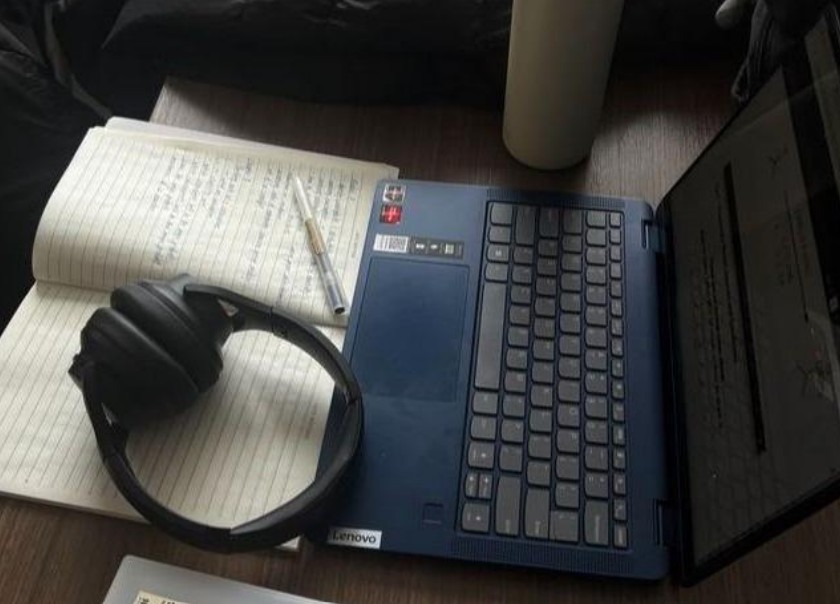
The Effect of Grad School and Its Course Load
Graduate school, much like other forms of academia, comes with its own set of demands, and I quickly learned that if you fall behind, it’s very easy to get lost in the clutter. During undergrad, I wasn’t the most disciplined student. I often forgot to keep track of deadlines and heavily relied on my memory for assignments.
Starting a graduate program only exacerbated the work demand. Suddenly, I had to keep track of everything ranging from preferred commute times and personal hobbies to lunch meetings and proficiencies. I felt my learning plateauing and saw no improvement in my mental health inside and outside of school. In search of advice, I asked friends and classmates for their perspective. Many of them struggled finding time for hobbies due to the amount of studying needed before an exam.
So, what’s the best way to balance life and clear your mind so that everything is in order and less overwhelming?
Different Methods of Clear the Brain
When your mind feels too heavy and loud, the best way is to “thought vomit” or “brain dump.” It’s difficult to center yourself when your thoughts are bouncing around like a DVD screensaver. Brain dumping provides an outlet for everything you want to do. If you see everything on a page in front of you, it’s much easier to prioritize important tasks and eliminate those you feel aren’t as necessary.
As a guide, I greatly referenced “How I Got My Attention Span Back” from Lilla Björn. Carrying a commonplacing journal is great, especially for those who aren’t as “Type A,” and would rather make a quick note for any important events or assignments. For example, I would dedicate a page to a single day and write any task I must do—like scheduling a dentist appointment or starting a study guide for OHP. Then, during my free time (lunch or after class), I would dedicate a couple minutes to time
blocking.
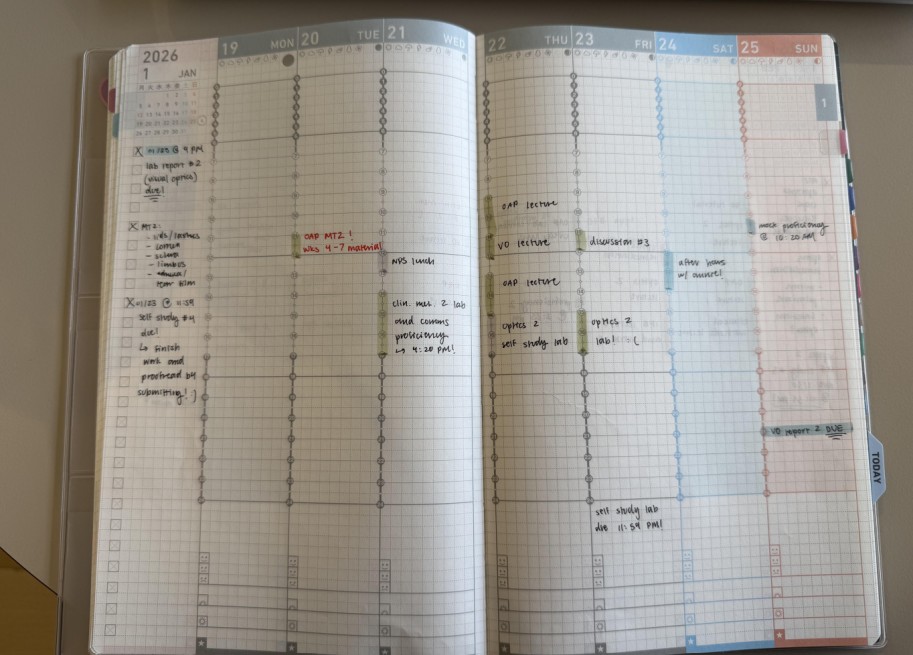
Time blocking is the second-best method at decluttering your life. During grad school, time passes quickly without notice. It’s very easy to get stuck in the routine of studying for exams or practicing for proficiencies, so how do you find your way out? With time blocking, you gain a better understanding of how the day is laid out and what is left to do. Using an analog weekly planner, I designated time slots for proficiency practice, general studying, and when I should take breaks/visit friends. Often, I have difficulty reminding myself to take a breather, especially when I’ve achieved a certain rhythm with my study pace. Based on prior experience, time block feels most beneficial when studying multiple subjects; for example, finals week!
Beyond academics, it’s optimal to have an organized study area. A clear workspace equals a clear mind. To achieve this, I emphasized organizing my locker and backpack to increase accessibility and efficiency. When attending after hours, especially after a long day, a clean locker is less intimidating to open than one on the brink of explosion. If all of your tools have a designated place, then you know where everything is without worry. Knowing that everything has a place builds a better habit of keeping decluttered and relieves overall stress.
Navigating grad school is a constant battle of trial and error. The best way to stay consistent is by practicing a little bit every day and holding yourself accountable! Grad school offers so much independence and experimentation. There is always room for growth!