
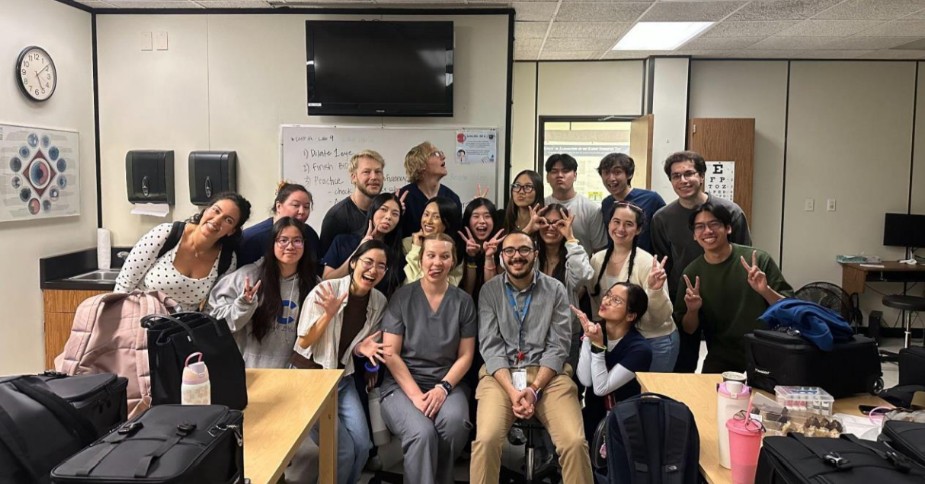
When I started grad school, I expected to spend countless hours mastering ocular anatomy, studying for exams, and figuring out the best way to ask a patient if “1 or 2 is better, or the same?” While those experiences have certainly shaped my education, I've come to realize that some of the most meaningful lessons aren't just found in a textbook.
One of the biggest mindset shifts I experienced in grad school was learning to embrace feedback instead of fearing it. Early on, I sometimes hesitated to ask questions or seek help because I worried it would make me seem unprepared. Over time, I realized that the professors weren't expecting perfection and they were committed to helping me grow. Every question they asked, every piece of constructive feedback they gave, and every challenge they presented was designed to deepen my understanding and prepare me for real patient care. Once I began viewing feedback as an opportunity rather than a critique, I became more confident in asking for help, participating in discussions, and learning from my mistakes. That shift has not only made me a stronger student but has also helped shape my overall mindset as an aspiring optometrist.
My biggest takeaway from my first year is that asking for help is not a sign of weakness, but rather a sign of growth. Whether it was attending office hours, emailing a professor or TA for
clarification, or studying with classmates who approached problems differently than I did, I learned that no one succeeds alone. Being in grad school has taught me not to measure success solely by grades or exam scores. Instead, I’ve learned to pay attention to the quieter moments of growth: the conversations, the teamwork, the resilience built after a challenging week, and the confidence that develops one step at a time.
Grad school will teach you far more than just its curriculum. If you remain open to learning from every experience, you'll leave with knowledge and the communication skills, adaptability, and confidence that make great healthcare professionals. These experiences in my first year have been just as valuable as the material I've learned in lectures.